Showing posts with label The Diet Rebel's Cookbook. Show all posts

Friday, February 11, 2011

Grape Nuts Cereal Recipe


Okay, the other day I had a craving for Grape Nuts, so I modified a couple recipes on the Net and came up with this yummy breakfast cereal. I call it Grape Chunks.

3 1/2 cups sprouted wheat flour
1 cup dehydrated cane juice (SuCanNat)
1/4 cup melted coconut oil
1/4 cup agave
1/4 cup molasses (If you don't like molasses, you can use 1/2 cup agave instead, or any combination to equal 1/2 cup liquid sweetener.)
2 cups buttermilk (or 1 cup plain yogurt mixed with 1 cup filtered water)
1 tsp sea salt
1 tsp baking soda

Mix dry ingredients and wet ingredients separately, then pour the wet into the dry and mix until smooth. Spread batter on a greased cookie sheet, or in two greased 9 x 13 pans. Bake for 25 minutes at 375 degrees. When done, remove from oven and allow to cool for about 10 minutes. Then comes the fun. Take this baked cake and break it up into a food processor, then process until it's tiny chunks. Next, pour the crumbs back onto the cookie sheet or 9 x 13 pans, and bake again at 210 for 45 minutes to an hour, or until brown. Cool and store in airtight container. This makes enough for 6 people, if two of those are growing teenagers.

Thursday, May 27, 2010

My Story


Growing up, I heard the phrase, "You are what you eat." I never gave it much thought, though. I probably would have just avoided Dum Dums, Ding Dongs, and suckers, and stuck to Smarties and Angel Food cakes instead, all while hoping to meet a Big Hunk someday. (I did, by the way. I even married him.)

It wasn't until my health crashed in my early thirties that I realized how true the statement was. I had eaten a lot of junk, and that is exactly how I felt. I was tired and grouchy all the time, I had a lot of the symptoms of diabetes, and I had a yellow/orange hue to my skin that had me looking like a tanning lotion application gone wrong.

Eventually, I found that I had hypothyroidism, anemia, blood sugar stabilization problems, hormone imbalances, and gluten, starch, and other food intolerances. At first, I felt very sorry for myself and cried a lot. In fact, I thought I was pregnant because I cried so much, even at the end of Mulan when her dad said she had honored him by saving China. (Sorry to those of you who haven't seen the end and I just blew it.) But I wasn't pregnant, and there would be no joy of holding a new little one in my arms after months of pregnant-like symptoms.

Then I decided to take action. I was going to feel better even if it killed me, and I knew that improving my diet was the first place to start. I delved into understanding how people have eaten for generations on this planet, a time before food was refined and processed, a time where civilizations lived completely off the land, and a time before diseases like hypothyroidism, cancer, diabetes, heart disease, autoimmune disease, and obesity existed. I discovered that our ancient ancestors were remarkably healthy, living for years longer than we do now, and didn't have these diseases. What they ate and how they prepared it determined their health, and I could apply this knowledge to my own cooking.

So I started having fun making healthy, whole foods based on these principles and found that my body could easily digest and assimilate them, even gluten containing foods because I applied the lost preparation techniques. I wasn't surprised that my health improved, but I was surprised that cooking this way made the food taste so awesome.

I couldn't keep these secrets to myself, so I began sharing my creations. The next thing I knew, I was teaching classes about true nutrition, selling my desserts, making a tasty berry cream pie on live TV, catering, and writing and compiling this cookbook with the culinary talents of Michelle Stewart, whose own health story, beliefs, and cooking experiences are quite similar to mine.

The Diet Rebel's Cookbook is made of more than 300 delicious recipes based on the forgotten food preparation techniques. Not only do the recipes taste wonderful, but they are easier to digest, help stabilize blood sugars, teach how to eat wheat when gluten intolerant, and how to properly use grains, beans, and nuts so you can increase nutrients and decrease gas. But most of all, you really are what you eat, and using this cookbook can make it wonderful.

To peek inside this book, click here.

Thursday, April 8, 2010

The Diet Rebel's Cookbook: Back Cover Blurb, Contents, and Introduction


Back cover blurb:

"Jillayne Clements and Michelle Stewart bring new meaning to the phrase, "You are what you eat" in The Diet Rebel's Cookbook: Eating Clean and Green. Don't let processed, refined foods that have been stripped of their nutrients be the primary fuel for your life. Give your body what it naturally needs.

The Diet Rebel's Cookbook reveals the benefits of eating whole, natural foods as a regular part of your diet and includes traditional recipes and time-tested preparation tips that will help your body get the most out of what you eat. Learn how to use whole grains, natural sweeteners, fresh produce, and healthy meats on a daily basis, and you will impress your friends and family with recipes that are both delicious and healthy.

You can't truly become healthy by following trendy diets that come and go from year to year. Go back to the basics, and you will discover what eating is all about! This cookbook will soon have your family eating right, feeling good, and enjoying each and every bite!"


Contents of the Cookbook:

Foreword by Michael Cutler, MD

Introduction

Jillayne's Story
Michelle's Story
Convincing Reasons to Use this Book
Endorsements & Testimonials

Section 1: You Really Are What You Eat

Pottenger's Cats
Whole Food in a Nutshell
You Are What You Drink
Healthy Soil Makes Healthy People
Healthy Animals Make Healthy Food
Super Foods & Real Food "Supplements"
Why We're Not Vegans or Raw Foodists & What We Actually Are

Section 2: Treasured Traditions

Tips from the Garden of Eden
The Healthy & Happy Hunza
God's Recipe for Health
Traditional Food Preparation

Section 3: From Our Kitchens to Yours

Time Saving Tips
Becoming Ingredient Savvy
Our Favorite Kitchen Equipment
Our Least Favorite Kitchen Equipment: Microwaves
Food For Thought
Complete One-Year Food Storage List

Section 4: Treasured & Tasty Recipes

Recipes for Success
Sprouting for Dummies & Smarties (Sprouting Grains, Nuts & Seeds, Beans & Legumes)
Basic Dairy Recipes
Stocks & Broths Basics
Natural Sweeteners 101

Recipes for Taste
Drinks, Smoothies, & Popsicles
Breads (Traditional Basic Breads, Muffins & Sweet Breads)
Breakfast, Brunch, & Eggs
Salads & Dressings
Sandwiches & Wraps
Soups & Stocks
Vegetables & Side Dishes
Meatless Entrees
Meaty Main Dishes (Chicken, Turkey, & Fish, Beef & Lamb)
Spreads, Seasonings, & Snacks (Spreads, Sauces, Dips, & Marinades; Snacks & Crackers; Homemade Seasonings & Mixes)
Sweets & Treats (Frozen Desserts; Cookies & Bars; Pies; Cakes; Other Sweets; Frosting & Toppings)

Section 5: Last But Not Least

Weight & Measurement Equivalents
Recommended Products, Equipment, & Books
Notes
Recipe Index
About the Authors/Contact Us


Introduction

A growing number of people in this world suffer from illness in one way or another. We could go into great length describing these diseases one by one, but we won't. The list is far too long and depressing, and chances are you’re already well acquainted with the items on it. Maybe you or a loved one suffers from one of them.

We too have struggled with our own personal health challenges. But instead of becoming sour with the lemons of life, we made lemonade. It turned our really good too (since we used organic lemons; natural sweeteners; and pure, mineral-rich water to quench your thirst on a hot summer day), so we put it in the recipe section.

We started first by looking for nutritional truths because we felt there was an ideal diet for humans and that eating it would create health. It was harder to find truth than we thought. Everywhere we turned, we were confronted with conflicting information from low carb, low fat, low calorie, no grain, all raw, or vegan diets. Who was right? We felt first and foremost that what we would eat and drink should supply all needed nutrients to our bodies. Why else was food and drink created? But we also felt that food should be completely satisfying and taste good.

We devoted a lot of time to studying and pondering the correlation between diet and health. We did not gain this nutritional education from a formal institution where we could earn the right to display initials next to our names, because--in all honesty--what we discovered was not formally taught. Still, the education we received changed our lives. We developed a deeper understanding of nature’s nutritional guidelines and learned the forgotten food traditions of the world’s healthiest civilizations. What people have eaten and how they have prepared it has helped humans in many ages of time be free of diseases such as diabetes, autoimmune diseases, obesity, and many other problems. Their diets not only influenced their health--but to a large extent--determined it.

After applying these principles we learned to our own lives, we began feeling better, and our families got sick much less often. In fact, anything more than an occasional illness is virtually nonexistent in our homes. But what we didn’t expect was that applying these lost cooking techniques to our own meals would make them taste so wonderful. We love the way they smell, the way they make us feel--and most importantly--we love eating the meals we prepare this way because they’re so scrumptious!

We have compiled this recipe book in order to share the deliciousness of these priceless cooking techniques and to pass along what we have discovered about true nutrition. Plus, we thought it would be nice to have a recipe book on hand for every time we hear, “Ooh, this is so good. I have to get the recipe.”

The unique recipes in this cookbook are not only healthy, they actually taste better than most food available today. Compare your basic store-bought loaf and tub of margarine to the possibility of a hearty, steaming slice of sprouted, whole grain bread topped with a melting mound of freshly churned butter from pasture-fed cows. Or consider the pure pleasure of being able to enjoy ice cream made with fresh cream, real vanilla, and natural sugars that nourish the body and are gentler on blood sugar levels. When you eat fresh, wholesome food, prepared using the forgotten and tasty traditions of our ancient ancestors, your body and your taste buds will thank you. You really can have your cake and eat it too.

What are the forgotten and tasty traditions of our ancient ancestors? It’s no secret that a good diet was essential to their health and longevity. What did they eat, how did they prepare it, and how does this information affect the nutrition and flavor of the food we prepare today? How can applying this information help prevent disease and potentially reverse it?

We’d love to answer these questions right here in the introduction, but then it would be entirely too long, the whole organizational flow of the book would be hindered, and there would be no enticing incentive for you to read on. But rest assured, these questions will be answered in the remaining pages of this book.

So make a bowl of air-popped popcorn tossed with melted butter, coconut oil, and sea salt (the recipe for this is also in the recipe section), and sit back and discover why you can enjoy popcorn like this without feeling guilty.

Jillayne Clements

Michelle Stewart

Special Note: There are many sick or diseased people who have been healed by eating a certain way. We make no claim that preparing food in a traditional manner as outlined in this book will guarantee healing. We also understand that everyone is different, and that every body reacts differently to certain foods. The ideas in this book have worked well for our bodies, but modifications may be made to suite what works best for you.

The information in this book is not intended to diagnose, treat, or cure illness or disease and is not intended to be used as a replacement for proper medical attention. Consult your health care professional before changing your diet.

Warning: Although the sprouting process decreases the amount of gluten in grains, sprouted grain products still do contain gluten. Special care must be taken if you are celiac or gluten intolerant. Please consult your health care professional before trying any gluten containing recipes.

Tuesday, April 6, 2010

Introduction

Growing up, I heard the phrase, "You are what you eat." I never gave it much thought, though. I probably would have just avoided Dum Dums, Ding Dongs, and suckers, and stuck to Smarties and Angel Food cakes instead, all while hoping to meet a Big Hunk someday. (I did, by the way. I even married him.)

It wasn't until my health crashed in my early thirties that I realized how true the statement was. I had eaten a lot of junk, and that is exactly how I felt. I was tired and grouchy all the time, I had a lot of the symptoms of diabetes, and I had a yellow/orange hue to my skin that had me looking like a tanning lotion application gone wrong.

Eventually, I found that I had hypothyroidism, anemia, blood sugar stabilization problems, hormone imbalances, and gluten, starch, and other food intolerances. At first, I felt very sorry for myself and cried a lot. In fact, I thought I was pregnant because I cried so much, even at the end of Mulan when her dad said she had honored him by saving China. (Sorry to those of you who haven't seen the end and I just blew it.) But I wasn't pregnant, and there would be no joy of holding a new little one in my arms after months of pregnant-like symptoms.

Then I decided to take action. I was going to feel better even if it killed me, and I knew that improving my diet was the first place to start. I delved into understanding how people have eaten for generations on this planet, a time before food was refined and processed, a time where civilizations lived completely off the land, and a time before diseases like hypothyroidism, cancer, diabetes, heart disease, autoimmune disease, and obesity existed. I discovered that our ancient ancestors were remarkably healthy, living for years longer than we do now, and didn't have these diseases. What they ate and how they prepared it determined their health, and I could apply this knowledge to my own cooking.

So I started having fun making healthy, whole foods based on these principles and found that my body could easily digest and assimilate them, even gluten containing foods because I applied the lost preparation techniques. I wasn't surprised that my health improved, but I was surprised that cooking this way made the food taste so awesome.

I couldn't keep these secrets to myself, so I began sharing my creations. The next thing I knew, I was teaching classes about true nutrition, selling my desserts, making a tasty berry cream pie on live TV, catering, and writing and compiling this cookbook with the culinary talents of Michelle Stewart, whose own health story, beliefs, and cooking experiences are quite similar to mine.

This cookbook is made of more than 300 delicious recipes based on the forgotten food preparation techniques. Not only do the recipes taste wonderful, but they are easier to digest, help stabilize blood sugars, teach how to eat wheat when gluten intolerant, and how to properly use grains, beans, and nuts so you can increase nutrients and decrease gas. But most of all, you really are what you eat, and using this cookbook can make it wonderful.

Wednesday, March 31, 2010

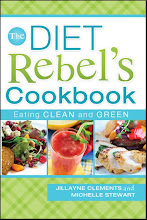
The Diet Rebel's Cookbook: Eating Clean and Green


I am so excited! Michelle Stewart (my co-author)and I have been getting our cookbook ready to go to print, because it will be out in April. Today, it's difficult for me to think about anything else but recipes and the words that create them, because we've been going over the proof, so I'll just blog about it.

Michelle and I discovered how very much quality of food impacts health. (We found this out the hard way, after losing health for a time, then regaining it through proper food and lifestyle choices.) This information was gathered from dietary studies of the world’s healthiest and disease-resistant cultures throughout history. We wanted to know what they ate that contributed to their health, and as a result, we learned the cooking techniques they used to increase nutrition and create healthier bodies—information that is lost to us today—and quite by accident discovered that preparing food this way made it taste amazing.

"What are the forgotten and tasty traditions of our ancient ancestors? It’s no secret that a good diet was essential to their health and longevity. What did they eat, how did they prepare it, and how does this information affect the nutrition and flavor of the food we prepare today? How can applying this information help prevent disease and potentially reverse it?” - from The Diet Rebel's Cookbook

I would love to answer these questions right here and now, but for the sake of time and space on this blog, you'll have to read the book to find out the answers to these questions. :0) But don't worry, it will be out in April, and I'm looking forward to getting my recipes out of a cookbook instead of my four inch stack of recipes, where whatever it is I'm looking for is ALWAYS on the bottom.